

Empowering Exercise For Older Adults


Our bodies change as we age, often due to a lack of physical activity. In fact, more than four out of five adults ages 55 to 64 fail to meet physical activity guidelines. Your fitness facility can play a vital role in helping older individuals embrace exercise as an essential part of their daily lives. As the population continues to age, there’s never been a more important time than now to encourage healthy, active aging.
Combating the Trends
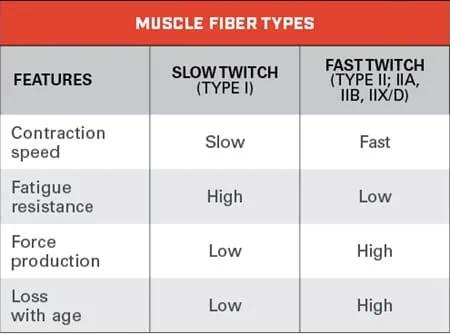
It’s well-known that strength and fitness matter when it comes to our longevity. Unfortunately, around age 40, significant muscle mass loss begins. Both slow- and fast-twitch muscles weaken, though fast-twitch fibers are especially affected. Consequently, older individuals lose the ability to generate the force needed to prevent falls. Additionally, fitness levels decline rapidly around this age, increasing the risk of metabolic diseases. That’s where your facility and your insights as a fitness professional come in, helping all the older adults you serve combat these age-related trends.
Getting Started
When welcoming older individuals to your fitness facility, it’s important to provide movement options that match their physical capabilities. Many won’t be ready for high-intensity workouts that engage fast-twitch muscle fibers. Instead, they’ll benefit from lower-intensity options that help establish a sustainable routine, gradually preparing them for more challenges.
Encouragement Without Pressure
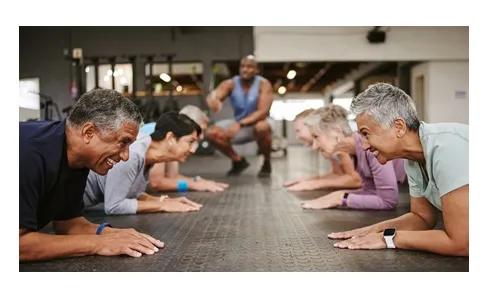
Overcoming age-related stigma about physical capacity can be challenging for older individuals. However, highlighting diverse age groups in your marketing materials can inspire confidence. As one retiree noted, “You rarely see anybody over 30 in (club) adverts… So you tend to think, well, it’s for younger people, it’s not for me.” This is why it’s critical for you to deliver a positive message that improvement is achievable at any age. At the same time, it’s just as critical to avoid pushiness. As another older fitness facility member explained, “In other (clubs), people are shouting: One more, one more! Keep pushing! Things like that. I don’t want to work out like them.” Studies of older individuals in fitness facilities confirm that the right amount of encouragement without pushiness can inspire their fitness journey, making regular exercise a habit.
Supportive In-facility Guidance
Fitness facilities can be intimidating, especially for older members unfamiliar with movements and equipment. As one retiree explains, “The thing is, when you get to a certain age like we are, if someone says ‘come tomorrow to do aerobics’ — and say you’ve never done it — you might be embarrassed, because for a start, you stand there like an ox and then there’s music and someone says ‘one, two, three,’ and off you go and you just don’t have a chance.” With this in mind, it’s easy to see why the assistance of fitness professionals like you is so crucial. Your support can help participants feel comfortable in group exercises, and you can provide post-workout check-ins for a sense of accomplishment. Perhaps most importantly, you can offer guidance on age-friendly equipment options that can help your people get more out of each workout despite the orthopedic issues that often arise with age.
Positive Social Interactions
Positive in-facility social interactions are key to retaining older members. Meeting your friendly staff is important to creating a sense of belonging for older adults, but the opportunity to socialize with others is even more impactful. “People need somebody to go with to the (club) to encourage them,” explains an 80-year-old exercise enthusiast. “If two people go together it will help some people.” As another 77-year-old club member put it, “The social aspect was great, the best thing I’ve ever done. I was meeting new people all in the same boat . . . I made a new friend, and friends are not easy to make at my age.”
Fostering a More Inclusive Community
As your fitness facility strives to engage and retain more older adults, be sure to focus on encouragement without pressure, supportive in-facility guidance and positive social interactions. By keeping these active aging insights in mind, your facility can build a healthier, more inclusive community that empowers individuals of all ages to embrace exercise. As the father of aerobics, Dr. Kenneth Cooper, put it, “We do not stop exercising because we grow old. We grow old because we stop exercising.”

Phil Campbell, MS, MA, FACHE, ACSM-CPT
References
Centers for Disease Control and Prevention. Adult Participation in aerobic and muscle-strengthening physical activities — United States. Morbidity and Mortality Weekly Report, 2013; 62(17): 326-30. https://www.cdc.gov/mmwr/preview/mmwrhtml/mm6217a2.html
Dismore et al. Study of the older adults’ motivators and barriers engaging in a nutrition and resistance exercise intervention for sarcopenia: An embedded qualitative project in the Milkman Pilot Study. Gerontology & Geriatric Med 2020; 6. https://doi.org/10.1177/2333721420920398
Dhurup et al. Customer service quality at commercial health and fitness centers. S Afr J Res Sport Phys Educ Recreat 2006; 28: 39-54. https://doi.org/10.4314/sajrs.v28i2.25942
Kosteli et al. Investigating the psychosocial determinants of physical activity in older adults: A qualitative approach. Psychology & Health 2016; 31(6): 730-49. https://doi.org/10.1080/08870446.2016.1143943
Kraft et al. Why few older adults participate in complex motor skills: A qualitative study of older adults’ perceptions of difficulty and challenge. BMC Public Health 2015; 15(1186): 1-11. https://doi.org/10.1186/s12889-015-2501-z
Jackson et al. Role of lifestyle and aging on the longitudinal change in cardiorespiratory fitness. Arch Intern Med 2009; 169(19): 1781-7. https://doi.org/10.1001/archinternmed.2009.312
Janssen et al. Skeletal muscle mass and distribution in 468 men and women aged 18–88 yr. J Appl Physiol 2000; 89: 81-8. https://doi.org/10.1152/jappl.2000.89.1.81
Rojas. Body, meanings, and physical exercise in older adults: The qualitative perspective of frequent gym-goers. Qualitative Sociology Review 2022; 18(3): 106-24. https://doi.org/10.18778/1733-8077.18.3.05
